
Liquid Spring Upgrades: Is This RV Upgrade Right for You?
Many motorhome owners begin researching suspension changes after noticing that certain roads, wind conditions, turns, or uneven surfaces make driving less comfortable than they would like. Liquid Spring is one upgrade option that may come up in those conversations. Before deciding whether to pursue it, it helps to understand the question behind the question: what do you want your RV to do differently?
Liquid Spring upgrades are best approached as a vehicle-specific discussion, not a one-size-fits-all answer. Your chassis, coach configuration, typical load, driving routes, and priorities all matter. The following answers can help you prepare for a more useful conversation about whether this type of upgrade fits your motorhome.
What is Liquid Spring?
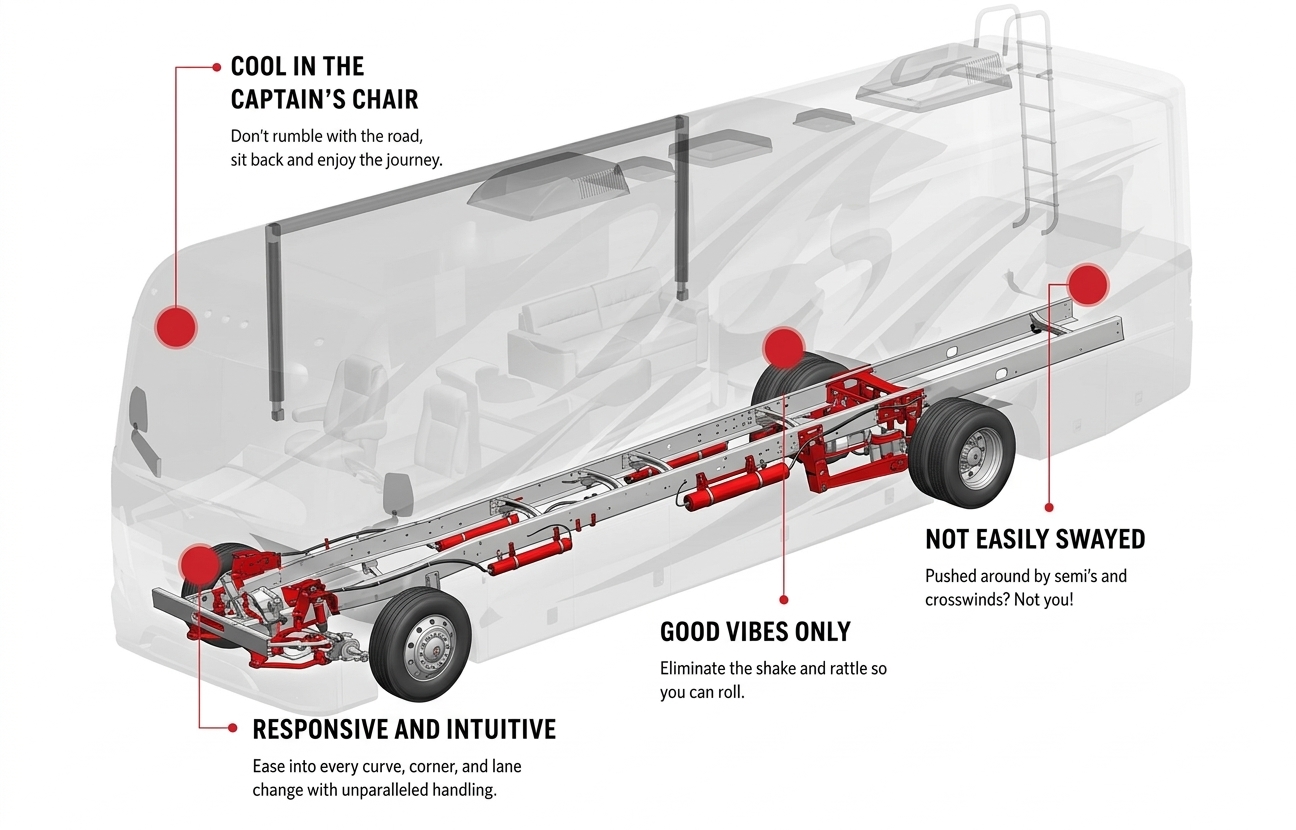
Liquid Spring is an electronically controlled suspension system used on certain vehicles and RV applications. In broad terms, it is designed to manage suspension behavior through a hydraulic system and electronic controls rather than relying only on conventional spring components.
The exact configuration, compatibility, and expected effect depend on the specific motorhome. That is why it is important to discuss the upgrade in relation to your RV’s chassis instead of assuming that another owner’s experience will translate directly to yours.
What concerns lead owners to research it?
Owners often start looking at suspension upgrades because they want to explore ride comfort, handling feel, body movement, or confidence on varied roads. Some are preparing for longer trips, while others want to better understand options after a particular driving experience.
It helps to describe the problem in plain language. For example, note whether the concern is most noticeable on rough pavement, curves, uneven campground entrances, highway grooves, or in crosswinds. Specific observations are more useful than saying the RV simply rides badly.
– Where the condition occurs
– How often it happens
– Whether the RV is loaded differently
– What changes the driving feel
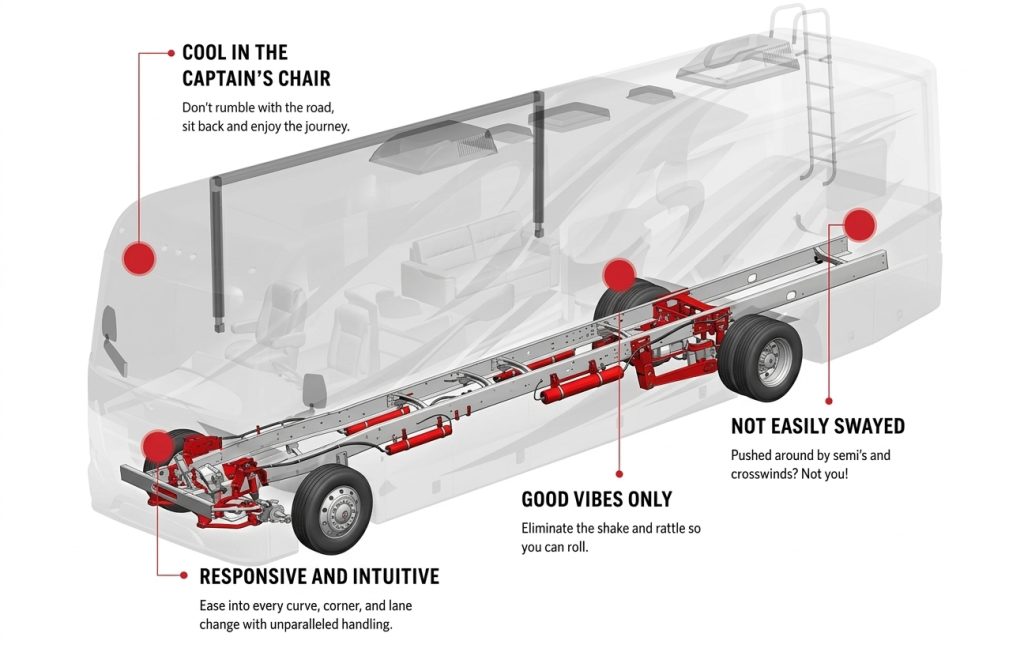
Liquid Spring upgrades start with compatibility
Before considering a Liquid Spring upgrade, confirm that the system is appropriate for your motorhome’s chassis and intended use. A service professional can discuss the vehicle information needed for that conversation, including year, make, model, chassis details, and current suspension setup.
Bring information about other changes that may affect ride and handling, such as tire condition, tire inflation practices, towing equipment, cargo loading, or prior chassis work. These items do not answer every question, but they provide important context for evaluating an upgrade.
How should you compare your options?
Begin by separating a current maintenance concern from an upgrade goal. If the motorhome has an active steering, tire, alignment, brake, or suspension issue, that concern needs clear assessment before it is treated as evidence that a particular upgrade is the answer.
Then identify your priorities. Are you focused on long-distance comfort, road feel, coach movement, towing, or a specific travel route? A good comparison weighs your real use of the RV, not just general descriptions of a product or feature.
Questions worth bringing to a service conversation
A thoughtful upgrade discussion should leave you with a clearer understanding of fit, installation considerations, and the maintenance expectations for your vehicle. Ask how the system relates to your chassis, what condition your existing components should be in first, and what follow-up care may be needed.
It is also reasonable to ask what observations would help confirm whether your current concern is suspension-related. Good decisions are easier when the discussion starts with the RV’s actual behavior and documented condition.
– Is this compatible with my chassis?
– What should be inspected first?
– How could my travel habits affect the choice?
– What maintenance should I understand?
Liquid Spring is a topic worth researching when your motorhome’s ride and handling no longer match the way you want to travel. The right next step is not to rush to a conclusion, but to define the driving situations you want to improve and verify the options for your specific RV.
If you are considering Liquid Spring upgrades, bring your motorhome details and a clear list of concerns to Redlands RV. A practical conversation can help you understand the fit before making an upgrade decision.
Frequently Asked Questions
Is Liquid Spring available for every RV?
No. Compatibility depends on the motorhome and its chassis. Confirm whether the system is appropriate for your specific RV before making plans around an upgrade.
Will a suspension upgrade fix every handling issue?
Not necessarily. Tire condition, inflation practices, loading, alignment, steering components, and existing chassis concerns can all affect how a motorhome drives. Those factors should be part of the discussion.
What information should I have before asking about Liquid Spring?
Have your RV year, make, model, chassis information, current suspension details if known, and notes about where and when you notice the driving concern.
Should I address worn tires before considering an upgrade?
Tire condition is an important safety and handling factor. Discuss any visible wear, pressure loss, age concerns, or damage so the full vehicle condition can be considered.
Can I research Liquid Spring before visiting a service center?
Yes. Researching basic terms and writing down your priorities is useful. A service conversation is still important for questions about compatibility, installation, and your motorhome’s existing condition.