
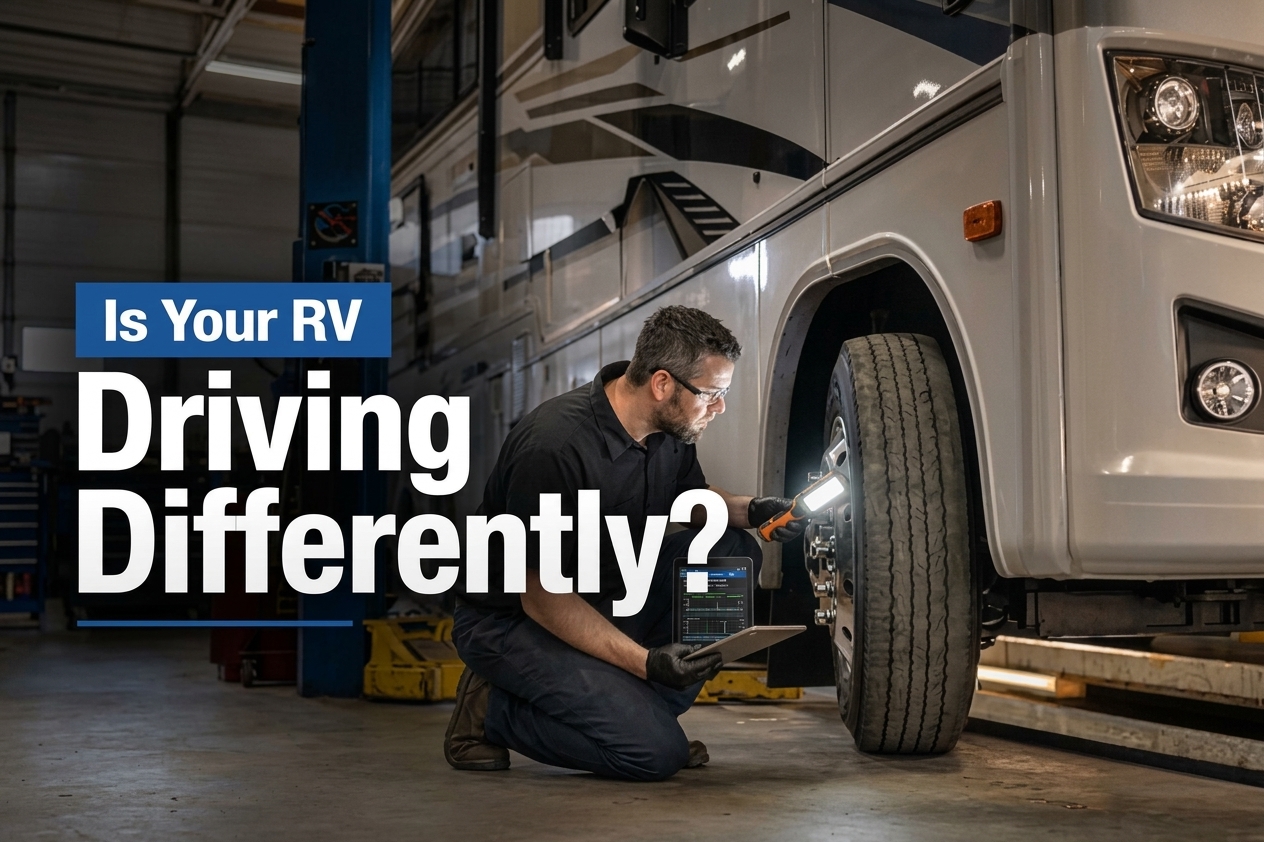
The chassis is the working foundation beneath a motorhome. It includes the systems that support movement and control, such as tires, steering, suspension, brakes, and powertrain-related components. Because these systems are under the vehicle and exposed to heat, road debris, weight, and long stretches of pavement, a developing issue may first show up as a subtle change in the way the RV drives.
RV chassis service begins with noticing those changes and describing them clearly. You do not need to diagnose the cause yourself. A short list of symptoms, the conditions when they happen, and the RV’s recent service history can make a professional inspection more productive.
What Does RV Chassis Service Cover?
Chassis work can involve several systems, depending on the RV and the concern being evaluated. Tires, wheels, steering, suspension, brakes, engine-related systems, and batteries may all be part of the discussion. Some owners also explore upgrades intended to support comfort, safety, or performance, including suspension-related options such as Liquid Spring.
The important point is that a chassis concern is rarely just an inconvenience. A vehicle that pulls, vibrates, handles differently, or displays a warning needs careful attention. The exact inspection process depends on the symptoms and the make, model, and equipment on the RV.
Driving Changes Worth Writing Down
A change does not automatically identify the failed part, but it does provide a useful starting point. Think about whether the issue happens at a particular speed, during braking, when turning, on rough pavement, or only after the RV has been driven for a while. Note whether it began suddenly or developed gradually.
Avoid trying to compensate for a handling issue by changing your driving habits and hoping it disappears. If the RV feels difficult to control, stop driving when it is safe to do so and seek appropriate assistance.
– New vibration through the steering wheel
– Pulling to one side
– Wandering or excessive sway
– A clunk over bumps
– Changes during braking
– New warning lights
Tires Can Tell Part of the Story
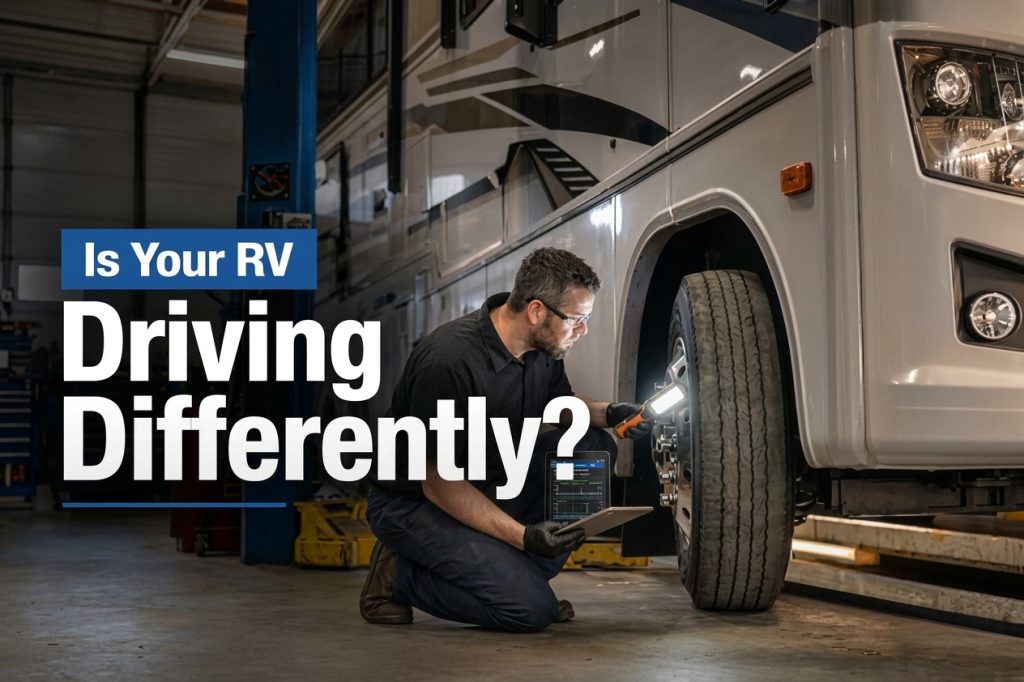
Tire wear is one of the most visible clues an RV owner can observe. Uneven wear, sidewall damage, cracking, or repeated loss of pressure should not be ignored. These conditions may relate to the tire itself, inflation practices, alignment, suspension, loading, or another issue that needs evaluation.
Check tires when they are cool and follow the tire and RV manufacturers’ instructions for inflation and load information. Tire service carries real safety risks, especially on larger RVs, so leave repairs, mounting, and work involving heavy lifting to qualified professionals.
Why RV Chassis Service Can Support Trip Planning
A service visit is easier to plan when it happens before a major trip rather than during one. This is particularly relevant for RV owners traveling between Southern California elevations, across hot inland roads, or with a coach that has been parked for an extended period. Schedule time to address known symptoms rather than waiting for a dashboard warning or a more noticeable driving problem.
Bring any maintenance records you have, along with notes about recent tire work, battery concerns, engine or generator behavior, and upgrades already installed. Those details can help connect the service conversation to the way you actually use your RV.
– Recent service invoices
– Photos of tire wear or leaks
– Dashboard warning details
– A list of driving symptoms
– Your upcoming travel plans
Your motorhome should not require you to guess whether a new vibration, pull, or handling change is normal. Paying attention early protects your ability to make informed decisions and gives a service team better information to work with.
For questions about RV chassis service, tires, batteries, engine systems, generator service, repairs, or upgrades, Redlands RV can be a practical local point of contact. Start by sharing what you have noticed and when it occurs.
Frequently Asked Questions
What is included in an RV chassis inspection?
The scope depends on the concern and the RV. It may involve evaluating tires, steering, suspension, brakes, wheels, engine-related systems, batteries, or other chassis components.
Why does my motorhome pull to one side?
Pulling can have several causes, including tire, steering, brake, suspension, alignment, or loading-related concerns. Because the cause is not obvious from one symptom, an inspection is appropriate.
Is uneven RV tire wear serious?
Uneven wear deserves attention because it can indicate a tire issue or a condition affecting how the tire contacts the road. Take photos and arrange an evaluation.
Can suspension upgrades change RV handling?
Suspension upgrades may be considered for comfort, safety, or performance goals, but suitability depends on the specific RV, its existing equipment, and how it is used.
What information should I bring to a chassis service appointment?
Bring service records, tire information, photos of visible concerns, warning-light details, and notes about when the symptom occurs, such as braking, turning, or highway driving.